
Life-long Learner
Don has benefited from both formal education and informal learning. Although he received several degrees, he believes that informal, practical learning is just as important as formal education. As a boy, Don learned from his parents and grandparents—lessons that have applied throughout his life.
Formal Education
Don’s formal education is summarized by these degrees and years received.
- Doctorate, Ashland Theological Seminary, 2020
- Master of Christian Theology, Ashland Theological Seminary, 2013
- Master of Public Administration, Wharton Graduate School, Univ of Pennsylvania, 1974
- Bachelor of Arts (Economics and Political Science), Capital University, 1972
- Sidney High School, 1968
First School and Memorable Vacation
Dale and Don started school at Longfellow Elementary School in Sidney, Ohio. Their walk to school took about 15 minutes.
Although Dale and Don’s parents did not have much money, they wanted to promote learning as much as possible. Therefore, they planned a family trip to Washington, DC in 1958. They went up the steps to the Capitol and into the Lincoln Memorial where Abe sits in the big chair.
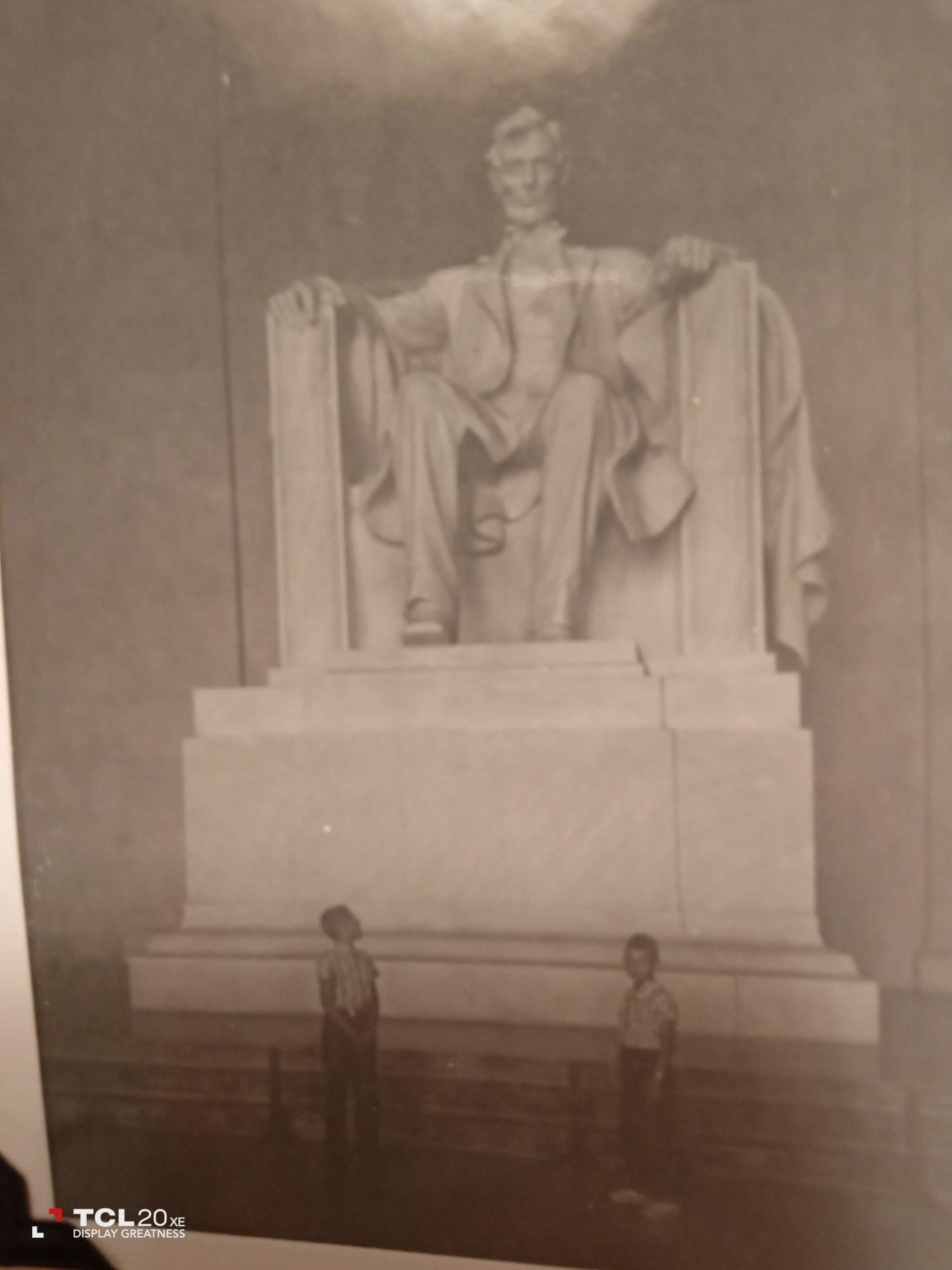
Don remembers that his parents had “sticker shock” at the hotel they picked for lunch. When they looked at the menu, Dale and Don quickly received guidance from their mother about what they could order. The family also went to Mount Vernon and Gettysburg. Although it didn’t last long, this was a big trip that many kids in the 1950s did not experience.
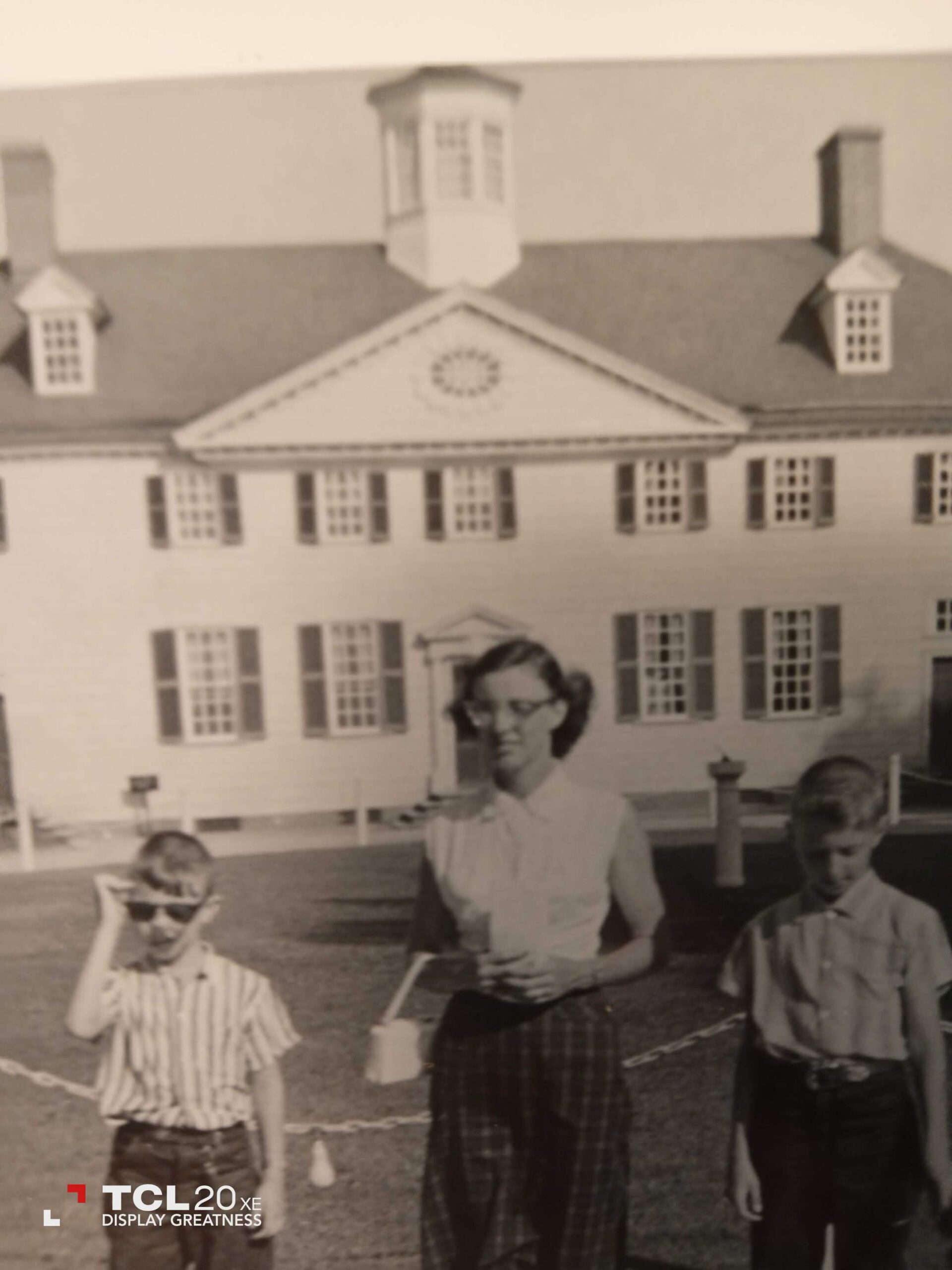
In the summer of 1959, the family took a short trip to Hocking County, Ohio. It was the last family vacation, since they moved to the farm in October that year.
Don had many educational opportunities, both formal education and practical lessons. One outstanding educational experience was in the 4th grade when Don’s family moved to a farm.
An Old Farmhouse and an Old Schoolhouse
On the first night at their new homestead, Betty and Melvin reviewed the enormity of fixing up the dilapidated barn and other buildings, as well as acquiring used farm equipment and growing crops. The challenge firmly sunk in. It was October of 1959.
Their mother believed that Dale and Don had the potential for college, so she encouraged them to strive for that goal. She wanted them to go to Sidney schools, and the farm was just inside the school district limit. Still, Dale and Don had a shock when their mother drove them for the first day to Port Jefferson, a village with a very out-of-date elementary school building. Originally built as a high school in 1877, it was about 80 years old when Don first laid eyes on it. The building was a towering structure in such a small town, and to Don it was scary. However, inside was the most fascinating configuration of school rooms and teachers imaginable.
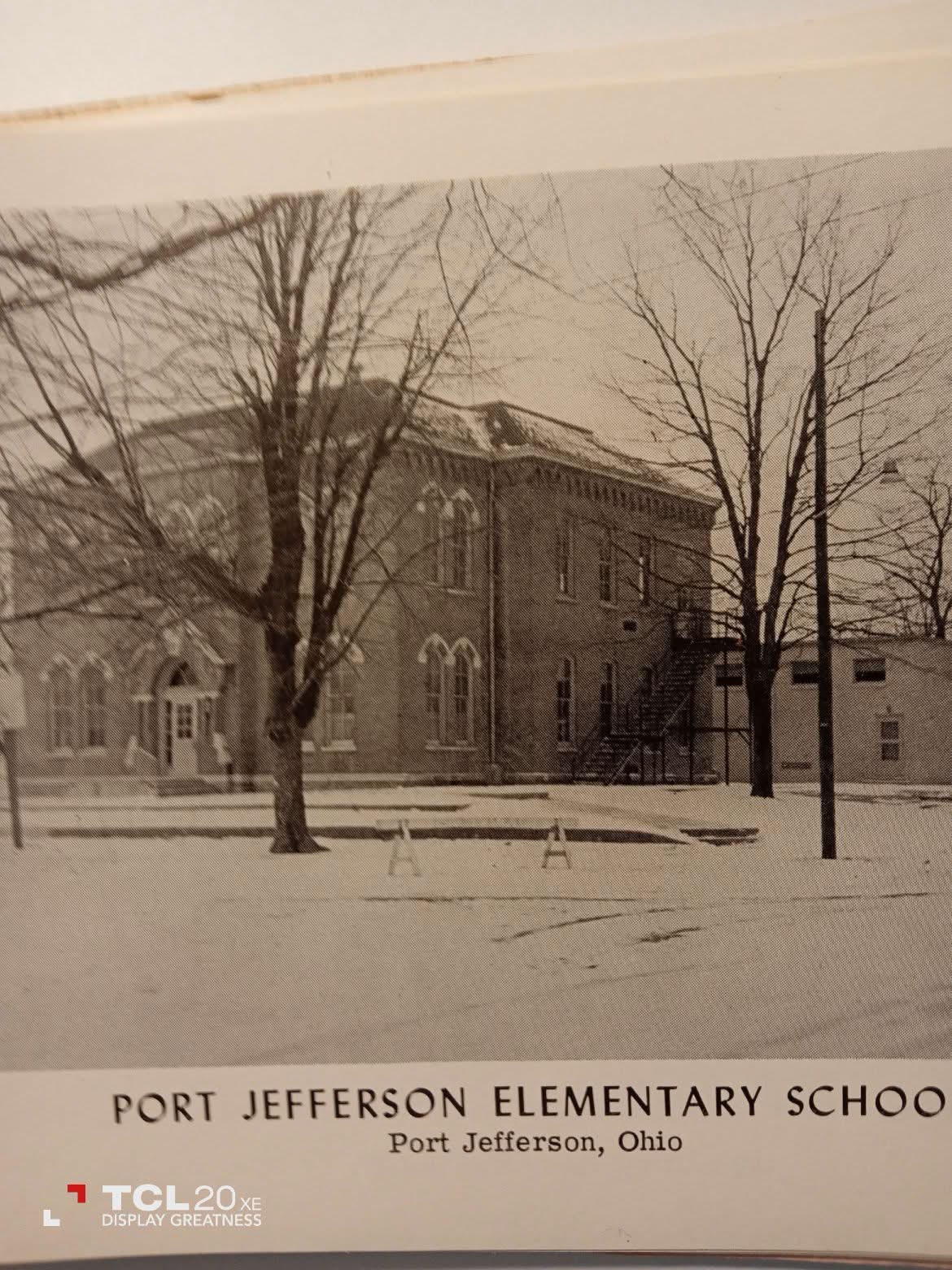
There were two classrooms and two teachers on the first floor and two classrooms and two teachers on the second floor. Thus, there were a total of four classrooms and four teachers. Still, there were six grades. To accommodate this imbalance, in the morning Mrs. Henson, who was one of the second-floor teachers, taught 4th graders while the 5th graders worked on an assignment in her large, dual classroom. Since the desks of the 5th graders were perpendicular to and away from the desks of the 4th graders, there was no confusion about which grade the teacher was addressing. Then, in the late morning the 5th graders switched classrooms to be with Mrs. Smith and the 6th graders. On the first floor, the same pattern applied as on the second floor with the 2nd graders switching classrooms.
Don flourished under the Port Jefferson system. The high ceilings enabled students from one grade to hear the teacher instructing the other grade. As a 4th grader, Don discovered that when he finished his assignments, he could listen to Mrs. Henson teaching the 5th graders. In that way, he became familiar with 5th grade materiai a year early. Similarly as a 5th grader, Don listened to Mrs. Smith teaching the 6th graders. Thus, Don learned new subject matter beyond his grade.
Rural living meant different play activities than in Sidney. Don explored the countryside, including a stream across the road from the family home. The stream meandered across another road and under a small, two-lane bridge. Don made some small boats and liked to watch them float downstream. He became so accustomed to the stream that he didn’t realize its hidden danger. On a winter day, Don walked to the bridge and saw that the stream was frozen. So, alone he walked onto the ice. All of a sudden, the ice broke and Don fell through! To his amazement, the water was very deep at the bridge abutment. His clothes were soaked, so he walked to the house and went to the basement where there were huge furnace pipes and some vegetables stored for the winter. He hung his wet clothes in the basement to dry. Don realized that his risky adventure was not a wise idea.
Central Junior High School
Don made new friends in the seventh grade, including Dave Easton whose locker was next to Don’s locker. Later, they became best friends. Mike and Don continued to be friends from Port Jefferson School, and rode the same school bus to Central Junior High School. Don remembered Pete and Tim from baseball. Tim and Don were on the same team when Tim stole home in the famous baseball play. Pete and Tim were good friends with Don for many years.
One of the 7th grade teachers unknowingly baffled all of his students on the first day of class. He made an assignment: each student should know the two’s of Geography by the next day. Students were in a frenzy. Did you hear him say two’s? Yes, that was the consensus. But what could it mean? Two what? The confusion persisted until the next day when Bruce, one of the students, asked the teacher to write the word on the blackboard. He wrote: t o o l s. The teacher’s southern accent had confounded every student. The lesson was that communication can be difficult at times.
Don played football in the 7th and 8th grade Fall program, but he was not a starter. He also played Spring Football in the 7th grade. Coach Carpenter chose him for quarterback. The short season had only one game: against Parkwood, the other junior high school in Sidney. Coach Carpenter left town after that season, and there was no Spring Football in the 8th grade. Don struggled through his football seasons until his senior year when he became a starter at offensive guard.
In the 9th grade, students from Parkwood Jr. High were merged with those at Central Jr. High School. This led to more new friends, in particular John who also lived in the country. The parents cooperated in giving rides from football practices and other extracurricular activities.
Sidney High School
Academically Don did well, usually near the top of each class. For English class, writing a paragraph regularly was difficult, as it was for Dave. Frequently each of them was stuck thinking of a topic. If they didn’t have their topics by the night before the paragraph was due, one called the other to generate ideas. Sometimes this process took until after 10pm. If so, a code was implemented: call and let the phone ring once. That way the phone would not wake the parents. If the one receiving the call was still up, he returned the call, and ideas would flow. Then it was up to each person to write his own paragraph.
When Don was 16 years old, he worked for Luther “Boots” Fogt, who owned a large farm. With acreage owned by others, the amount of land that Boots farmed totaled about 1,000 acres—sizable at that time. So, extra help was needed for the summer. Don’s main job was baling hay. Boots liked to talk, and at times he asked Don to sit on the tractor just for someone to talk to. Other than Don‘s parents and grandparents, this was the first time that he learned about an older man’s ideas.
Football Coach Haines expected football players to wrestle as a winter sport. Thus, Don signed up his junior year. Coach Haines seemed satisfied with Don’s performance at the 145-pound level. He did well in practices, but he didn’t like the spotlight of a match. He lost every match except one tie, although he didn’t get pinned for a long stretch. For his efforts, Don received his first varsity emblem for a letter sweater. A big challenge for Don was the weight restriction and not eating all he wanted. He did not wrestle his senior year.
As a 17-year-older, Don worked another summer as a farmhand for Boots Fogt. His son Larry, who was a year older than Don, was the primary worker, while Dave Deal was called to bale hay when needed. Boots was angry on one occasion when wet hay was put in the hay loft. It could start a fire and burn down the barn. The solution was to remove the wet hay. This was a memorable lesson: it is best to make sure things are done right the first time.
The 1967 football season began with a surprise. Bill, an offensive guard, could not play in the opening game. The coaches called on Don to replace him. An even bigger surprise occurred for Don when Coach Haines praised him for his blocking efficiency. Don was a starter the rest of the season except for the game after his grandpa died. Don was even more surprised when he received four post-season awards. For more, see “Here Am I“ under the tab God’s Gift of Faith.
Don graduated from Sidney High School with about 270 students in the Class of 1968. Then, in the summer as an extension of participating in 4-H, Don had the opportunity to attend Club Congress in June 1968. It was held in Columbus with some sessions at the Ohio Statehouse. In fact, one of the activities was to present mock legislation. It was fun to gather with new friends from around the state. One memorable girl was Gayle Gregg, along with her friends Janet and Cindy, from Ross County. Four summers later, Don married Gayle’s sister Sue Ellen.
In 1968, Don was one of the Sidney High School students selected to work at the Avon plant of Ross-Pattern, a foundry in Shelby County. He worked 4 hours each evening in May and then 8 hours each evening in the summer. The job paid well, but was hot and dirty—conditions faced by many workers for a lifetime. Since Don needed the money for college, it was worth it. He also worked for Boots Fogt for 4 hours per day, making his total workday 12 hours. Don saved as never before!
The time for the 1968 county fair was approaching, and Don entered the tractor driving contest. Neither of his dad’s two old tractors would be suitable. So, Don asked Boots if he could use his newer-model Allis-Chalmers with split front wheels for maneuverability. Don also wanted to thoroughly wash the orange tractor, which he used to cultivate corn. Boots agreed. To get it home, Don drove the tractor on the edge of Sidney with a sidetrip through the area of Frisch’s restaurant with outdoor service. Two of his friends hopped aboard, and they made the familiar loop from Frisch’s to downtown and back. On the second trip, a security guard asked who owned the tractor. He called Boots, who said: “Boys will be boys. I’m going to back to bed.” It felt good to be trusted.
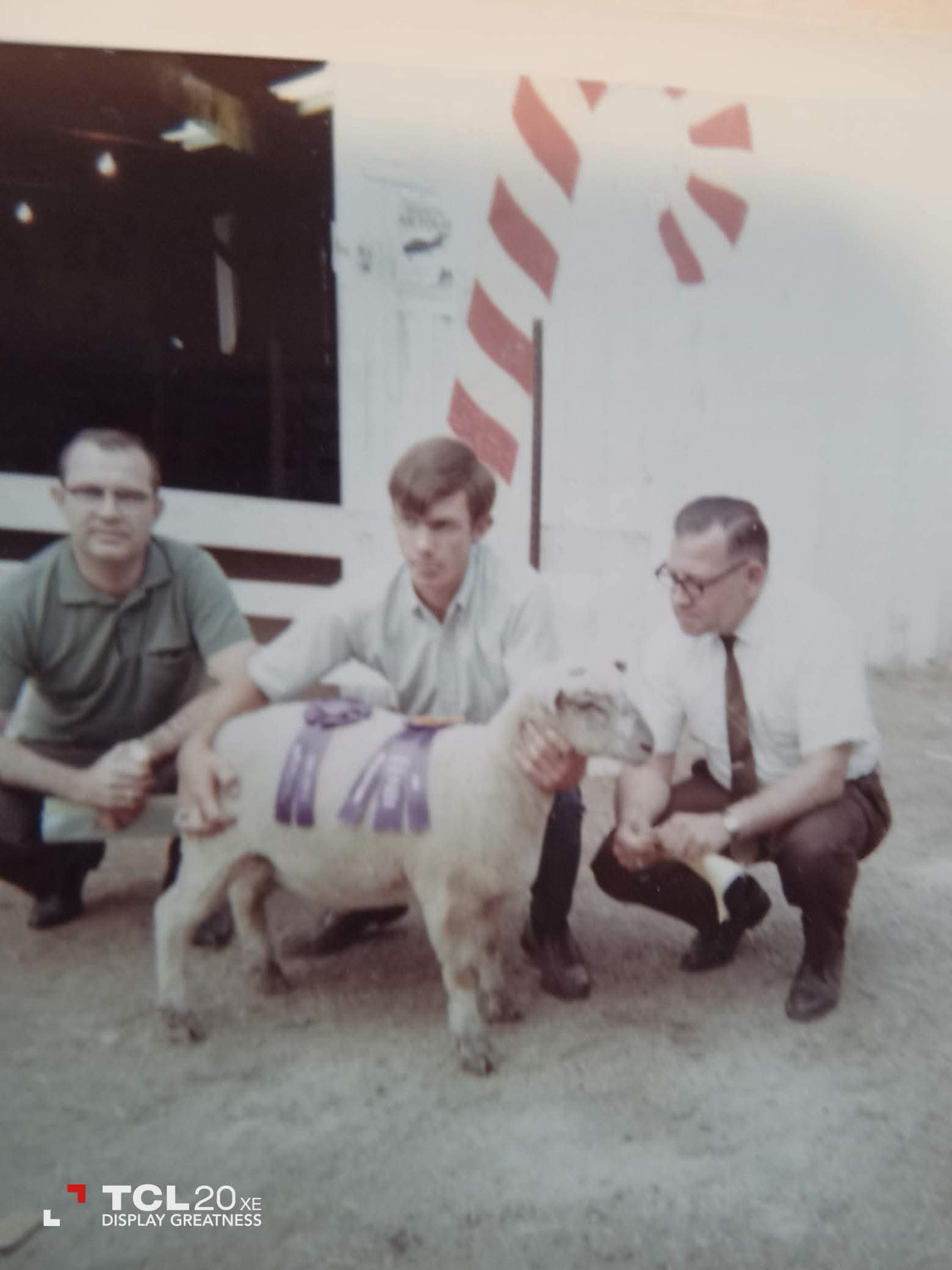
For the second year, Don showed market lambs at the Shelby County Fair. Expectations were only slightly higher than the first year. To the surprise of Don and his dad, one lamb won Grand Champion! Further, their best lambs won Reserve Champion Pen of Three. Two factors seemed to make the difference: a different judge and the exercises given the lambs by Don’s dad. Because of Don’s 12-hour workdays, he could not exercise them to that extent. Don gave the Grand Champion trophy to his dad for his consequential efforts.
Capital University
By the end of the Summer of 1968, Dale and Don prepared to go to Capital University. Dale was to be a sophomore and Don a freshman. Their mother drove them to Capital. Don wanted to run for class president and had help preparing artistic signs to be posted around campus. At the right time, Don put up the signs. After being elected, he was dismayed; there were no duties. It was a learning experience: know what lies ahead before putting a substantial amount of effort to get there.
Don’s first semester was very challenging because he was placed in an advanced calculus course. It was comprised of upper class students and one other freshman. Don used half of his study time on calculus, only to receive a “C,” whereas he got “A’s” in his other three courses. Don discarded his Math major so he would have more flexibility, and as it turned out, he could use it.
Don and Sue Ellen met in the second semester of their freshman year. Their relationship grew throuhout their college years and then marriage, as described under “Faith Heritage“ and “Supportive Spouse.“
Don’s primary duty at the Ross-Pattern main plant in the summer of 1969 was shake-out as it was the previous summer at the Avon site. He also helped a worker turn over unusually large molds. That worker sprinted to the restroom for breaks. Many employees probably thought he was in a hurry to relieve himself. However, Don knew better. The man rushed back to his station and resumed making molds. Since he received bonuses, his diligence provided extra money for his family. One day, Don made a costly error by turning over a mold too soon. The hot liquid metal formed streams across the concrete floor. At that moment, a VP was walking by. He stopped momentarily and then continued. Don learned the meaning of mercy first-hand.
The days were quickly counting down to the end of the Spring Semester, 1970. What’s more, Sue Ellen planned to transfer to Ohio University for her junior and senior years because she wanted to study in her chosen field of speech therapy. Capital had a Speech major but not a Speech Therapy major. Thus, since their homes were in separate places, they would not be seeing each other again unless they made a plan. They agreed to meet at Sue Ellen’s home on the weekend of June 19-21 in the same way they did the previous summer.
In the Summer of 1970, Don worked at Stolle, a factory in Sidney. He was on a 3-man crew that lifted large pieces of aluminum onto a platform. A comparable-sized piece of Styrofoam was lined up with each aluminum piece. The final step was to lower a press to seal the two pieces together to form insulation. This job furthered his lasting appreciation for laborers
Starting in the Fall of 1970, Sue Ellen could generally get a ride from Ohio University to Columbus. Since she was still well-known at Capital, she could easily stay in one of the women’s dorms. When Don visited Sue Ellen at OU, he drove his car traveling on Route 33 through Lancaster and Nelsonville and on to Athens. Sue Ellen arranged for Don to stay in a men’s dorm.
At downtown Athens and Ohio University, there was still evidence of the protests held earlier that year over the Vietnam War and the Kent State shootings on May 4, 1970. OU and other universities closed for the rest of the spring term. Decades later, Don and Sue Ellen were impressed by the visitor center at KSU commemorating the tragedy.
At Capital University, Don took courses on state and local government, and specifically on city government. He became interested in a possible career as a city manager because it was professional and nonpartisan. He became interested in the University of Pennsylvania due to its tradition in management and reasonable distance from Ohio. He applied even though the program was relocated from the Fels Institute to the Wharton Graduate School. Separately he applied for a fellowship to pay his tuition. Both were successful. He discussed it with Sue Ellen.
She was interested in the idea, and wanted Don to send a letter to her parents providing the details. He sent them a letter on April 26, 1972, letting them know about the fellowship and that the Sidney city manager wanted Don to intern with him over the summer. Don wrote: “The whole thing is just turning out great, and I’m really praising the Lord for it!” He told them that the Wharton School starts August 28. In June, Don and Sue Ellen drove to Philadelphia for her to seek a speech therapy position. Bucks County Schools hired her.
Marriage and then Philadelphia
Sue Ellen and Don were married on August 19, 1972, at a ceremony at the Bainbridge church. After a brief reception and family gathering, the wedded couple left for Columbus and then Philadelphia. Apparently foreseeing the computer age mushrooming, the Wharton Graduate School required all incoming students to take an intensive two-week computer programming course. A successful program was due each day, no matter how long it took.
Don’s graduate studies focused on public policy analysis and were applicable to all levels of government: federal, state, and local. The program was rigorous, and Don realized that more job experience would have been helpful for this level of study. An opportunity came when Don worked as an intern with the township administrator of Cheltenham Township.
Don and Sue Ellen spent most of the 1973 summer at Philadelphia although they made a day trip to the Jersey Shore and drove to Gettysburg for their 1st Wedding Anniversary. Sue Ellen and Don liked to view historical sites, and Gettysburg was the first of many that they visited during their 50-vear marriage.
The culmination of Don’s studies at Wharton was a research project. He and another student named Earnie were assigned to work on it together. The project was to evaluate a Pennsylvania county’s property tax assessment process. They examined the basis for the county’s assessments and did a statistical analysis. They found great disparity among homeowners’ tax assessments. The State Attorney General’s Office was interested in the results, so Earnie and Don rode a train to Harrisburg to meet with them.
Don graduated from Wharton with a Master of Public Administration (MPA) degree on May 20, 1974. Since Sue Ellen was still working at her speech therapy job, Don relaxed from his stressful studies, took walks to the Delaware River, and prepared to move to Flint. Michigan. He was hired to work for the city. which had an innovative city-manager form of government at the time. Don and Sue Ellen had discussed the options and chosen Flint.
Flint, Michigan
At Flint, Don’s title was Budget and Administration Officer, but budget analyst would be more descriptive. His immediate boss was Budget Director Paul Lapointe, who was well-respected and very qualified. Their offices were close to the city manager’s group of offices. Don felt the whole situation would help him to become a city manager someday.
In November 1974, the Flint voters approved a city charter change from a city-manager form of government to a strong-mayor form. Don’s dream of becoming a city manager went out of focus. However, it could still work out if the mayor to be elected in a year endorsed at least some of the good government reforms of the current administration. Meanwhile, Sue Ellen and Don took advantage of the time of uncertainty, inviting family and friends from Ohio to visit.
In November 1975, the voters elected a mayor who opposed the reforms. Overnight, Paul and Don were relocated to a large, unused computer room and their jobs were realigned under the Finance Director. The mayor appointed his chief campaign contributor as city administrator. When he left, the mayor appointed his chief campaign advisor to the job. The trend toward political decision-making, and away from analysis, continued.
An example was the capital budget. Whereas Don was given primary responsibility for it, his job was merely to schedule department heads to make presentations to the mayor. The Director of Parks and Recreation presented a 5-year plan, and the mayor said that he would take all of the projects. “All of the first-year projects,” the director wanted to clarify. No, all five years, and “I want them all completed before the next election.” The director was stunned. There was no analysis of whether the projects could even be done. Even so, Paul and Don worked many hours to diligently prepare the annual city budget.
With plenty of comp time and sufficient money, Don and Sue Ellen took a vacation to Europe in the summer of 1976. They first arrived at Frankfurt, where Don’s friend Dave was a captain in the Army. He went with them to Denmark. Back in Germany, Don and Sue Ellen visited Don’s brother, who was a pastor in Augustfehn. The remainder of the trip was just Sue Ellen and Don, and they traveled to many cities and saw many sites. Most of their travel was by Eurail. They enjoyed the time together!
In 1977, Don and Sue Ellen went to Europe for their second summer, this time to participate in Dale’s marriage to Edith. Other family members also attended. After the wedding, Sue Ellen and Don went to Rotterdam and then to England and Scotland. Brighton, England was Don’s particular interest because he thought that things were lining up for him to be hired as village manager of Brighton, Michigan. He even bought memorabilia. It became a learning lesson for him when he wasn’t hired.
In 1978, Don applied for a job opening with the Office of Management and Budget (OMB) for the City of Dayton, Ohio. He was asked to come for an interview. The timing was perfect because it coincided with a weekend get-away in May planned by Sue Ellen and Don for Berea, Kentucky. Don was offered the job, and both of them wanted to move back to Ohio. This was an opportunity that they couldn’t pass up.
Dayton, Ohio
Don started his new job on July 31, 1978. Dayton is close enough to Sidney that he could drive to his parents’ home to stay overnight during week nights. Of course, he drove to be with Sue Ellen in Flint on the weekends.
Don’s work at the Dayton OMB was interesting and expanded his skills. He performed both policy and budget analysis, and he had some challenging assignments. Annually he measured the city’s status in accomplishing its goals, and he prepared a special report documenting the decline in the city’s economy. The report was used in the city’s request for federal action in development of the region.
Although Don’s job with the City of Dayton was going well, he had the opportunity to apply for a higher position with Montgomery County. He assumed that the government was professional because it had a county administrator. He soon found out differently. The issue was political campaign contributions and whether Don would bow to pressure.
The County Administrator hired Don as Budget Manager for Montgomery County and said he would be promoted to Director of the Office of Management and Budget in a year because the current director would be leaving. Don led the development of a new budget system, and Montgomery County was the first Ohio county to receive an Award for Distinguished Budget Presentation from the Government Finance Officers Association. Despite his accomplishments, the highest county political officeholder told him in person that she didn’t like it when her employees did not support her. To Don, he worked for the county government, not her. Further, Don declined to make political campaign contributions to her and every other politician.
In early September, 1985, Don was offered a position with the Ohio Legislative Budget Office (LBO). It was just the type of job Don wanted—nonpartisan. In addition, a move would allow more contact with Sue Ellen’s family. They bought a house on the west side of Columbus. Meanwhile, the county administrator of Montgomery County requested LBO for Don to stay for more than three months, until the budget was completed in December.
In Don’s last month with Montgomery County, the president of the board of county commissioners presented Don with a public resolution passed by all three commissioners. It thanked Don for his service. Sue Ellen attended the meeting. Life is full of ironies. The person who recognized Don’s service was the same person who blocked his promotion.
Columbus, Ohio
Don started employment at LBO right after Christmas, 1985. This meant that he had only one week to prepare for the Ohio Legislature reconvening during the first week in January. He was assigned to supervise the “fiscal note” process. A fiscal note was a financial analysis of proposed legislation. Don was named division chief six months after starting at LBO, and he had a challenging and enjoyable career for many years.
After many years with LBO and the Ohio Legislative Service Commission, Don felt a calling for more Biblical and spiritual study. He enrolled at Ashland Theological Seminary in 2006. See “God’s Gift of Faith” for the conclusions of his studies.